Cruise Advice
The best autumn river cruises in Europe
Published 21st of July 2026 | By Alex Loizou

Cruise Advice
Autumn is harvest season on Europe's great wine rivers, and that alone is reason enough to visit. From the Douro to the Rhine, the vines are being picked, the vineyards are turning, and the summer crowds have gone home.
Five rivers stand out: the Douro, the Rhône and Saône, Bordeaux, the Danube and the Rhine, each with its own wines, scenery and character.
Ask us when to take a river cruise and, more often than not, we will point you towards autumn. The light softens, the riverside towns feel like themselves again, and the cooler air is far kinder for walking a vineyard path or a cobbled lane. If you travel for food, wine and scenery, the months from September into November are amongst the finest times to sail.
Here, in short, is where to go and why.
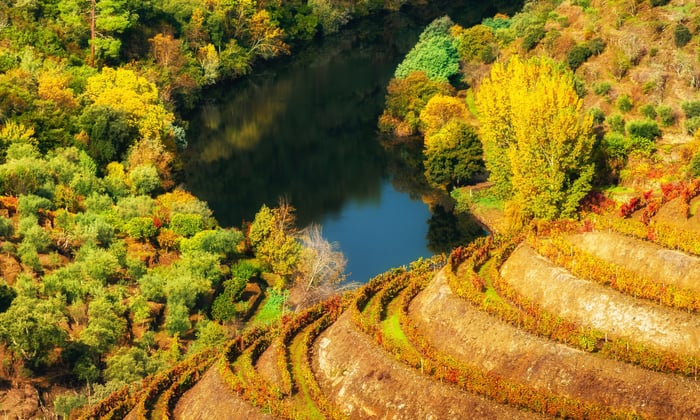
Few rivers put on a show like the Douro in autumn. From the middle of September into early October the vindima, the grape harvest, takes over the valley. Pickers work the sometimes near-vertical terraces by hand, the air fills with the smell of fermenting fruit, and at some of the old quintas the grapes are still trodden by foot in granite lagares, music and all. The vines turn copper, amber and rust, and the low autumn light along the river draws photographers from miles around. Several lines run sailings timed to the picking. The season has its own table too: chestnuts, wild mushrooms, game and the first olive oil of the year, all made for the robust Douro reds and a glass of port. Most cruises run seven nights, round trip from Porto. This is also the time of year when the summer heat drops and sightseeing is at its most comfortable, meaning these sailings book up early, so plan well ahead.
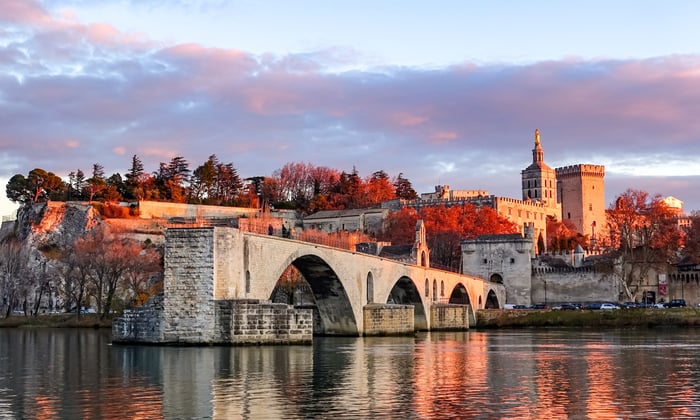
This is two rivers and two moods, joined at Lyon, which happens to be the best place to eat in France. Head north on the Saône and you are in Burgundy, with Beaune and its tiled Hospices at the centre, the grand names of the Côte d'Or within reach and the gentler hills of the Mâconnais and Beaujolais beyond. Turn south on the Rhône and the country opens into Provence: the Roman theatre at Vienne, the Papal Palace at Avignon, the amphitheatre at Arles and the vineyards of Châteauneuf-du-Pape. Autumn is the vendange across both regions, which makes it the busiest and arguably the most exciting time to come. It also brings what Lyon does best: the first black truffles in the markets near Grignan, game and wild mushrooms on the menus, with the stalls of Les Halles at their most tempting. For anyone who loves food and wine in equal measure, little compares.

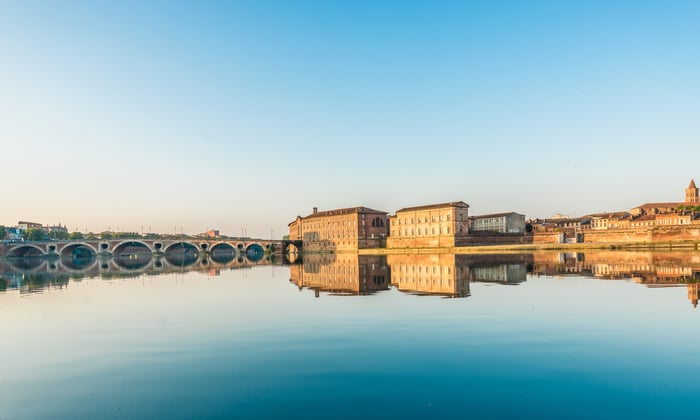
Bordeaux is best understood as a meeting of waters. The Garonne and the Dordogne join just north of the city at the Bec d'Ambès to form the Gironde, the largest estuary in Europe, and ships sail a round trip from Bordeaux, working between the two banks. Those banks carry some of the most famous wine names on earth. West lies the Médoc, with the great châteaux of Margaux, Latour, Lafite and Mouton Rothschild; east, across the water, the medieval village of Saint-Émilion with its UNESCO-listed monolithic church, Pomerol just beyond. Autumn is the vendange, when the château doors stand open and the cellars are at their most absorbing. The region's other pleasures are in full season too: oysters from the coast, the city's own caramelised canelé and long lunches paired with first growths. There is history in the glass here, from the days when Eleanor of Aquitaine brought the region to the English crown and the wine trade began in earnest.
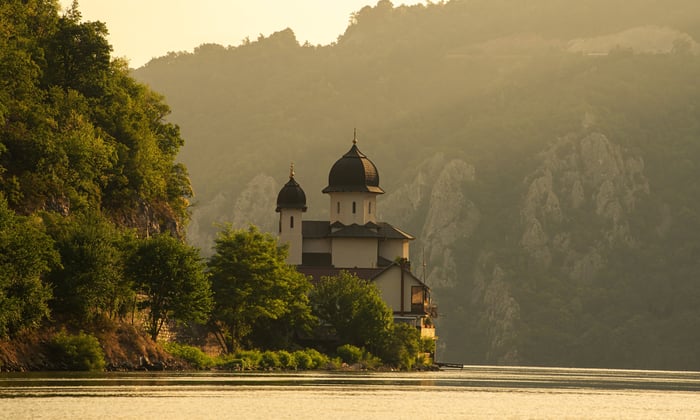
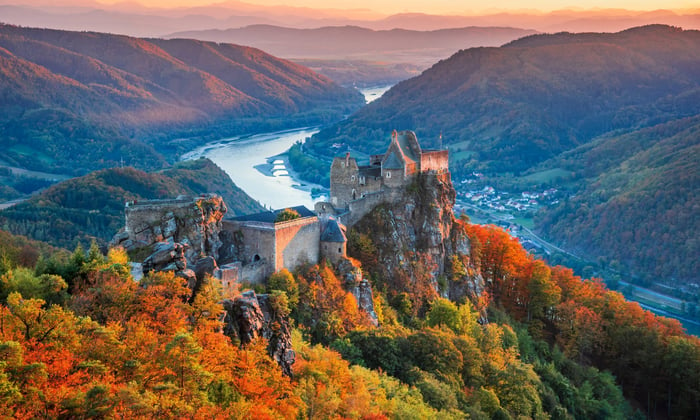
The Danube is the river most people picture first, and autumn brings out its quieter, more rural side. The cities are reason enough at any time: Vienna with its palaces and coffee houses, Bratislava tucked beneath its castle, Budapest stretched along the water and at its best lit up after dark. But the heart of an autumn cruise is the Wachau, the UNESCO-listed run of Austrian wine country between Melk and Krems. Terraced vineyards climb from the river, the Grüner Veltliner and Riesling are coming in, and the wooded hills turn red and gold. The villages are some of the prettiest in Europe, including Durnstein, with its blue-and-white church tower and the castle ruins where Richard the Lionheart was held. The crowds are far thinner than in July, and a glass of new white wine on deck, valley sliding past, is hard to better. Time it for late November and the first Christmas markets are opening in Vienna and Budapest.
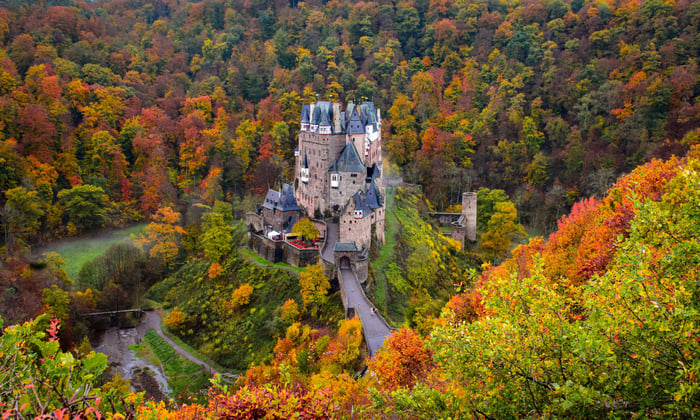
For sheer concentration of scenery, nothing in Europe quite matches the Rhine Gorge. Along the sixty-odd miles between Rüdesheim and Koblenz the river cuts through slate hills crowded with more than forty castles, the Riesling planted on slopes so sheer they can only be worked by hand. In autumn the vines turn rust and bronze, the picking is under way, and the wine towns hold their harvest festivals. Rüdesheim is the classic stop, with the wine taverns of the Drosselgasse, a cable car up to the Niederwald monument and a warming Rüdesheimer Kaffee laced with brandy. Watch for the Lorelei rock where the river narrows, the toll castle of Pfalzgrafenstein marooned on its island and the rival fortresses of Burg Katz and Burg Maus. The cooler air suits the active options too, a vineyard walk above the town or a cycle between villages. Many Rhine cruises run from Amsterdam to Basel, some taking in the Moselle, whose terraces produce Riesling every bit as good.
A little planning goes a long way with an autumn river cruise. The best wine-themed sailings fill months ahead, and the experience varies a good deal from one river and one cruise line to the next. That is where we come in. Tell us what matters to you most, whether it is the wine, the scenery, the food, or simply sailing when the rivers are quieter, and we will help you find the ship and the voyage that suit you.
You can browse all of our European river cruises or call us for honest, tailored advice.
It depends on what you are after. For the wine harvest, September into early October is the moment, and nowhere shows it better than the Douro, where the picking and the foot-treading are in full swing. October brings the best of the colour as the vineyards turn, from the Wachau on the Danube to the slopes of the Rhine Gorge. By late November the season is winding down, though Danube and Rhine sailings carry on into the first Christmas markets in Vienna, Budapest and the German wine towns.
Not especially, though it cools as the season goes on. Early autumn on the southern rivers stays warm: the Douro in September often sits in the low to mid-twenties, the perfect temperature for sightseeing, and Bordeaux and the Rhône are mild and bright well into October. Further north, and later in the year, the Danube and the Rhine turn crisp, with cooler mornings and the odd rainy spell, so a warm layer and a raincoat earn their place. Most of your day is spent ashore or watching the scenery from a comfortable deck or lounge, so the weather rarely gets in the way.
The operators we work with offer the chance to view rather than participate. Douro cruises through September and early October sail right through the vindima, when the picking is under way, and the quintas are at their busiest. Several build a harvest visit into the itinerary, and at estates that still tread by foot in the traditional granite lagares, usually with a good deal of ceremony and music. Similar experiences turn up on the Rhône and in Bordeaux during the vendange. The exact dates move with the weather each year, so it is worth speaking to us about which departures are most likely to coincide.
It depends. Many people prefer travelling once the peak-summer crowds thin out and the school holidays end. And ports like Rüdesheim on the Rhine and Dürnstein on the Danube are far more pleasant for it. The more comfortable autumn temperatures on the Douro mean that autumn (together with spring) is considered peak season, and departures sell out months in advance, so it pays to book early. It also tends to be the later autumn sailings that are priced more keenly, especially on the more northerly European rivers.
Most autumn river cruises run for seven nights, with longer options that combine regions or add a few nights on land. Round trips are common, from Porto on the Douro and from Bordeaux on the Gironde, while the Rhône runs between Lyon and Provence and the Rhine between Amsterdam and Basel. Getting there is usually a short flight from the UK to Porto, Bordeaux, Lyon, Vienna or Amsterdam, with rail an option on some routes if you would rather stay on the ground.
It is a fair question on Europe's rivers. The Douro is fed by reservoirs rather than mountain snowmelt, so its levels stay reliable. On the Rhine and the Danube, unusually dry or wet weather can affect a sailing, but the luxury lines are well practised at adjusting the route or arranging a coach for a stretch when needed, and serious disruption is uncommon.


Related articles