The Douro is a river you cruise for one reason above all others: wine. The valley is one of the oldest demarcated wine regions in the world, with steep terraced hillsides, quintas dotted along the banks and a pace of life shaped by the growing season. Almost every operator runs the same 7-night route from Porto, so the decision is which line suits your style and whether to add a land extension.
Luxury Douro River Cruises

Find a cruise
Our top picks
AmaWaterways
Flavors of Portugal & Spain (Wine Cruise)
From Porto to Vega de Terron, Portugal
11 Jul - 18 Jul 2026 (7 Nights)
From £4,144 per guest
Uniworld River Cruises
Douro River Valley
From Porto to Porto
12 Jul - 19 Jul 2026 (7 Nights)
From £8,849 per guest
Scenic River Cruises
Delightful Douro
From Porto to Porto
13 Jul - 20 Jul 2026 (7 Nights)
From £4,773 per guest
Scenic River Cruises
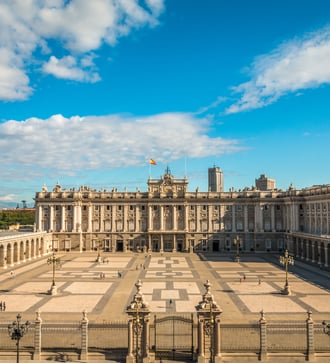
Delightful Douro with Madrid
From Porto to Madrid
13 Jul - 23 Jul 2026 (10 Nights)
From £5,429 per guest
Our Insight
Highlights of a luxury Douro river cruise
The Douro is a food and wine cruise first and foremost. Days ashore involve visiting a quinta for a tasting, walking through a village where smoked hams and local cheeses are laid out in the market, or sitting in a small restaurant where the menu is whatever was caught or grown that morning. The regional cooking is hearty and unfussy: like roast pork, cornbread, grilled sardines, local cheeses and wines that rarely leave the valley.
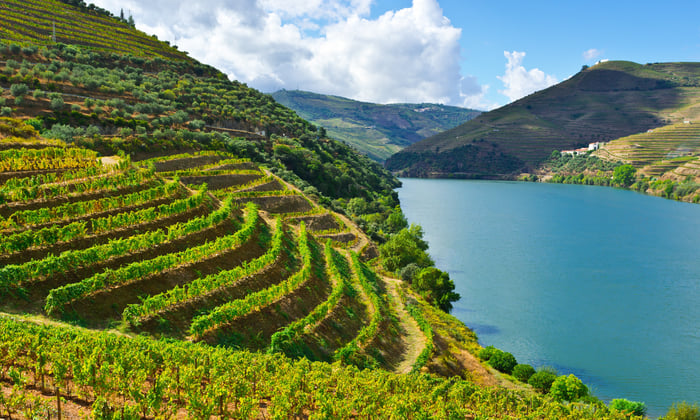
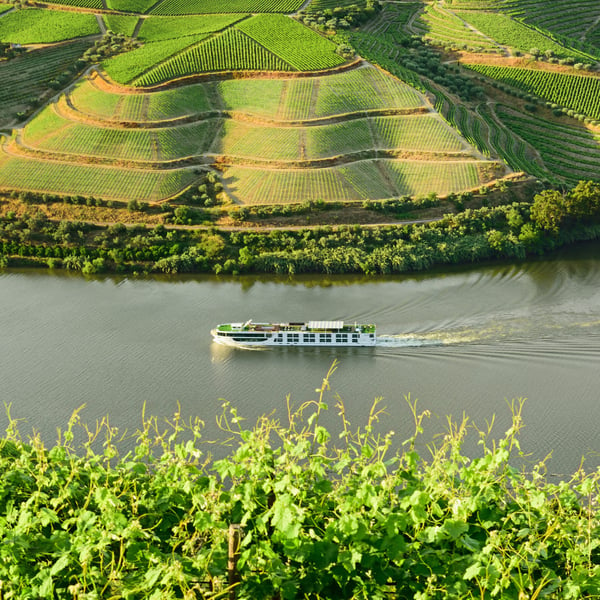
Between the food and wine, the scenery is the constant. The light shifts through the day from soft morning haze to deep golden afternoon, and there is always something to watch from the deck. Terraced hillsides carved into the rock. Small villages perched above the water. Quintas with their names painted on white walls.
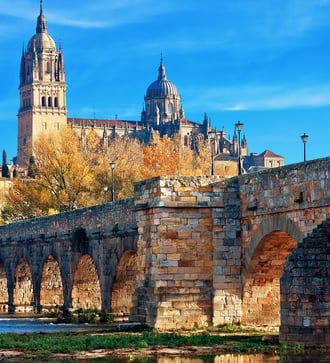
Salamanca, across the border in Spain, is a regular excursion from the upper river. A golden Renaissance city with a vast main square and a university founded in the thirteenth century, it is one of the most rewarding day trips on any European river cruise.
Why luxury matters on a Douro river cruise
Douro river ships are built to navigate locks and narrow stretches, so they are smaller than ships on the Danube or Rhine. Guest numbers are typically between 84 and 126 on luxury vessels.
The difference between operators shows most clearly in the food, the wine selection, the quality of the quinta visits and the excursion programme. The best lines arrange private tastings at family-run estates rather than large commercial cellars, serve regional wines matched to the landscape you are passing through and offer guided hikes through the vineyards as well as standard walking tours.
Luxury Douro river cruise itineraries
- 7 nights - The standard Douro cruise: roundtrip from Porto, sailing upstream through the valley to the Spanish border, then returning downstream. Ports are small and distances short, so you spend more time on deck and ashore than on most European rivers.
- 10-14 nights with land extensions - Lisbon, Madrid or both can be added before or after the cruise. These extensions are well worth considering: the valley is quiet and wine-focused, and a few nights in Lisbon or Madrid add contrast and energy.
- Salamanca - A day trip to Salamanca in Spain is included on most itineraries. Some operators visit Salamanca as part of an overland transfer to Madrid, which gives you more time in the city.
Luxury cruise lines sailing the Douro
All of our luxury river cruise partners operate on the Douro. The choice comes down to onboard style, what is included and which land extensions are available.
AmaWaterways
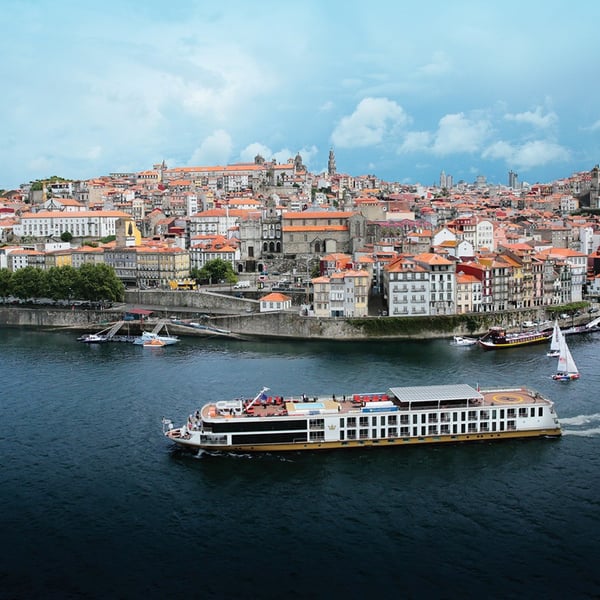
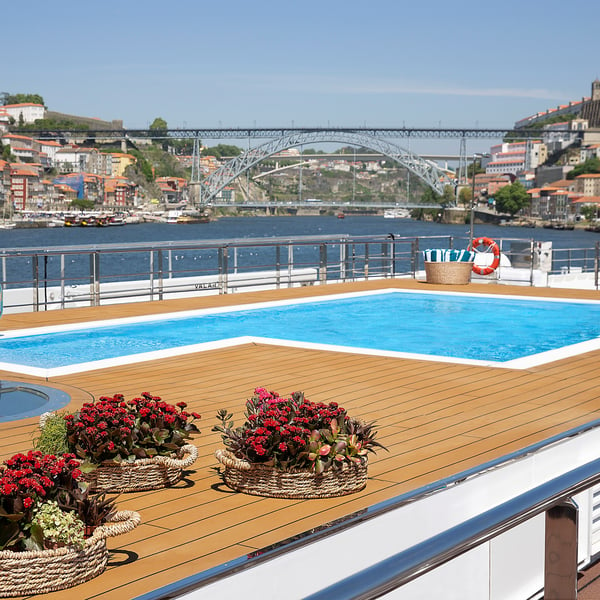
AmaWaterways sails the Douro on the 102-guest AmaVida, and 102-guest sister ships AmaDouro and AmaSintra. Each have with a heated pool on the sun deck and a strong food and wine programme. Their Enticing Douro itinerary is the standard 7-night roundtrip from Porto, while Flavors of Portugal and Spain adds a 3-night pre-cruise stay in Lisbon and a 3-night post-cruise stay in Santiago de Compostela, world-renowned as the final destination of the Camino de Santiago pilgrimage route. The Lisbon extension includes a city tour and a day trip to Sintra.
Tauck
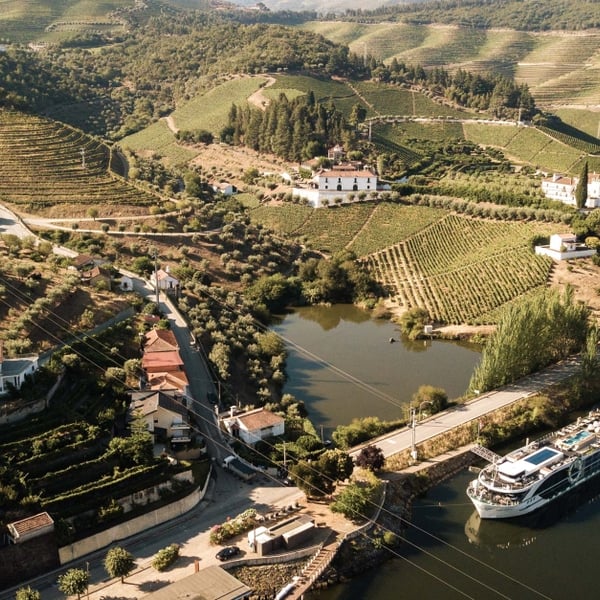
Tauck takes a different approach to the Douro. Their flagship itinerary, Exploring the Douro, plus Lisbon and Madrid, is a 12-day journey that bookends the 7-night cruise with two nights in Lisbon and two nights in Madrid. What sets Tauck apart is how Salamanca is handled: rather than a day trip from the ship, Salamanca is visited as part of the overland journey between the river and Madrid, which gives you more time in the city and avoids a long coach return. Tauck sails on the ms Andorinha (84 guests), a custom-built ship designed specifically for the Douro, with a second sister ship, the ms Saudade, joining in 2027. The addition of the ms Saudade nearly doubles Tauck's Douro capacity and comes with three new itineraries, including a shorter 6-night Essence of the Douro and a Madrid-only extension. Tauck is fully all-inclusive: excursions, all drinks, gratuities and airport transfers. They also run a family Douro cruise through Tauck Bridges with a Madrid extension.
Uniworld
Uniworld sails the S.S. São Gabriel on the Douro, a boutique-style ship with individually designed interiors and a maximum of 98 guests and in 2027 the 94-guest S.S. São Rafael joins the fleet. Their Douro River Valley itinerary is the standard 8-day cruise, while Portugal, Spain and the Douro River Valley extend to 11 days with a Lisbon stay. Uniworld also offers a Madrid extension, adding three nights after the cruise with a guided visit to Salamanca along the way, a flamenco show and a day trip to Toledo. As with all Uniworld voyages, excursions, drinks, gratuities and transfers are included in the fare.
Scenic
Scenic operates the Scenic Azure on the Douro, carrying up to 96 guests. They offer the only 11-day cruise on the river (the Unforgettable Douro), which gives you more time in the valley itself rather than extending with land stays. Scenic also offers Porto extensions with extra nights in the city before or after the cruise, and a Madrid extension (Unforgettable Douro with Madrid), though the Madrid option involves a flight from Porto rather than an overland transfer. Scenic is comprehensively all-inclusive: drinks, excursions, gratuities and butler service. Their Scenic Enrich programme includes exclusive experiences such as a private concert at Sao Francisco Church in Porto.

When is the best time for a luxury Douro river cruise?
April to June is most popular: warm days, green hillsides and vines in full leaf. September and October are harvest season, when the grapes are picked and the valley has a particular energy. The hillsides turn amber and gold. July and August are hot, sometimes very hot. November is cooler and quieter. March offers good availability and lower prices.
Travel tips and FAQs for Douro river cruising
How does the Douro compare to other European rivers?
The Douro is smaller, quieter and more focused on food and wine. There are no grand capital cities along the route. The excursions centre on vineyards, villages and local food rather than museums and palaces. The scenery is consistently beautiful. If you have cruised the Danube or Rhine and want something with a different pace, the Douro is an excellent choice.
Is a land extension worth it on a Douro cruise?
We almost always recommend adding at least one. The valley is beautiful but quiet, and after a week on the river, a few nights in Lisbon or Madrid add contrast. Lisbon is the more natural pairing for a Portugal-focused trip. Madrid works well for a wider Iberian experience.
What is the Salamanca day trip like?
Salamanca is a coach journey from the upper Douro, and most operators allow a full day. The city is built from golden sandstone that glows in the afternoon light. The Plaza Mayor is one of the finest public squares in Spain. The university has an extraordinary carved facade. It is a long day but one of the most memorable excursions.
Do I need to enjoy wine to appreciate the Douro?
It helps. Wine is woven into the valley, the landscape, the food and the excursion programme. That said, the scenery alone is worth the trip. If wine is genuinely not your thing, the Danube or Rhine may give you a more varied experience.
What should I pack for a Douro river cruise?
Comfortable walking shoes with good grip for vineyard walks and steep village streets. Sun protection in spring and summer as the valley is sheltered and temperatures can be higher than expected. Layers for mornings on deck. Smart-casual clothing for evenings. No formal nights.
Is the Douro suitable for a first river cruise?
It can be, particularly if food and wine are high on your list. The short flight to Porto, the 7-night itinerary and the relaxed pace make it easy to navigate. The Danube offers more variety of cities and landscapes for a first cruise, but the Douro is a strong choice if wine country is what draws you.
Can I combine a Douro cruise with extra time in Porto?
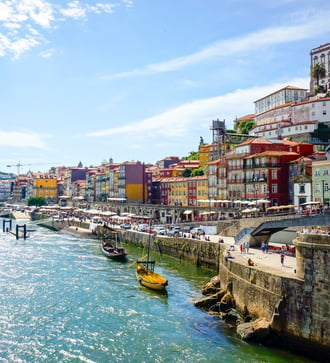
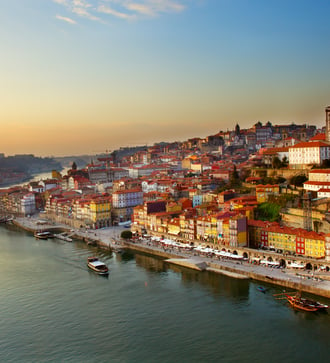
Yes, and we recommend it. Porto is a rewarding city that deserves more than the half-day most itineraries allow. An extra night or two gives you time to explore the Ribeira district, visit the port lodges, eat in the riverside restaurants and walk across the Dom Luis I bridge.
What our clients say
“They are very well informed about each cruise line and itinerary. That means their advice is very trustworthy.”Mr Adair
collections
You may also like

Danube river
Perhaps Europe’s most famous river, the Danube stirs memories of the grand old days of Mitteleuropa, passing through the majestic imperial cities of Vienna, Budapest and Bratislava.

Western Mediterranean
Boasting the chic French and Italian Rivieras, the Western Mediterranean’s elegant seaside ports are also the gateway to historic cities such as Florence and Pisa.

Rhône & Saône rivers
The Rhône winds its way through some of southern France’s most captivating regions, from the sun-dappled vineyards of Burgundy to the lavender-scented hills of Provence.