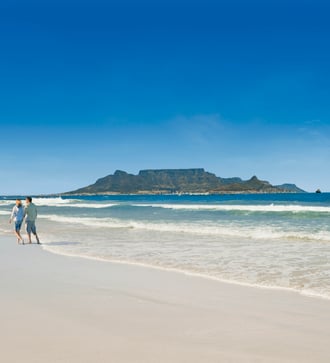
See Table Mountain rising straight out of the harbour, wild coast stretching east to the Garden Route and ships heading west to Namibia's desert shore or north up the African coast. South Africa is for travellers looking for landscape, wildlife and proper cultural depth all in one trip. Small ships dock in the heart of each port, reaching quieter stops larger vessels skip.
South Africa Small Ship Cruises

Find a cruise
Our top picks
AmaWaterways
Discover Africa
From Cape Town to Johannesburg
17 Jul - 26 Jul 2026 (9 Nights)
From £12,577 per guest
AmaWaterways
Stars of South Africa
From Cape Town to Johannesburg
17 Jul - 31 Jul 2026 (14 Nights)
From £16,308 per guest
AmaWaterways
Rivers & Rails of Africa 13 Nights
From Cape Town to Johannesburg
17 Jul - 30 Jul 2026 (13 Nights)
From £16,462 per guest
AmaWaterways
Wildlife & the Falls
From Johannesburg to Johannesburg
19 Jul - 31 Jul 2026 (12 Nights)
From £15,327 per guest
Our Insight
Highlights of a Luxury Southern Africa Cruise
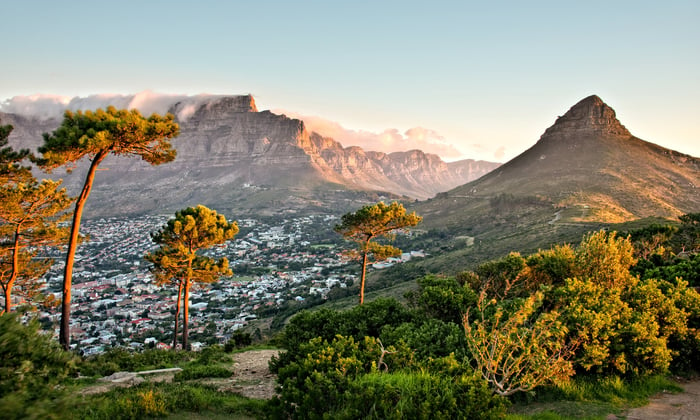
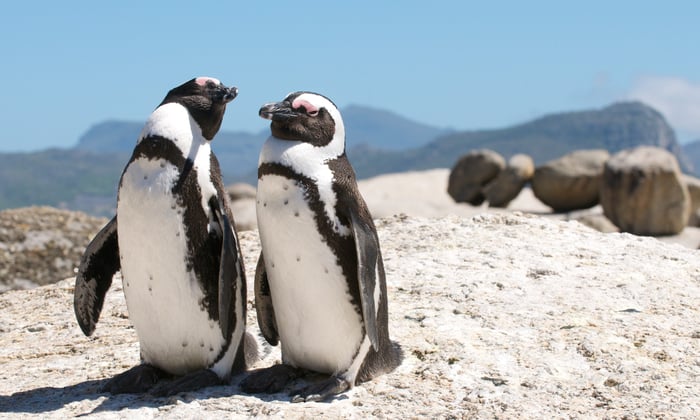
Cape Town sits between the ocean and mountain. Table Mountain fills the sky above the waterfront, casting shadow over the harbour at dawn, glowing amber at sunset. The city moves fast with trams rattling, buskers on Long Street, fish sizzling at Harbour House while seals bark below the tables. But just twenty minutes out, penguins waddle across the sand at Boulders Beach. An hour into the winelands, you are tasting chenin blanc under aged oak trees, with the Stellenbosch mountains purple in the afternoon heat. Or a short boat journey takes you to visit Robben Island, where Nelson Mandela was imprisoned.
Small ship cruises from Cape Town head west to Namibia, where the Skeleton Coast lives up to its name. Dunes drop into the Atlantic at Walvis Bay. Seals cover the jetties. Flamingos turn the lagoons pink. A journey into the western desert is a must. Or they turn east around the Cape of Good Hope, following the wild coast to Gqeberha, East London, Durban. Each port opens onto something inland, such as game reserves in the Eastern Cape where rhino graze within sight of the road, or the green valleys of KwaZulu-Natal humid and lush, with connections to Kruger, Victoria Falls, and the Okavango Delta. The Garden Route threads between them, with a slower pace and worth adding on either side of your sailing.
Some voyages reach even further. North to Angola, São Tomé, the Cape Verdes. East to Madagascar, Mozambique, Mauritius, the Seychelles and on to Asia. A few cross the Atlantic towards South America. The flight from the UK is ten hours overnight, but you arrive in the same time zone, with no jet lag, straight into the day.
The Small Ship Difference in Southern Africa
South Africa runs on distance. The drive from a commercial port to a wildlife reserve or wine estate can burn half a day. Southern Africa small ship cruises dock in the centre of Cape Town, Walvis Bay, the quieter coves along the coast, so you step off and into the morning rather than waiting for tenders or long transfers.
Overnights in port are common. This opens up evenings properly: dinner at a winelands restaurant with candlelight under the vines, late return from a jazz club in a Cape Town township, sunrise on Signal Hill before the city wakes, or overnight tours at a special game reserve. Small ships also call at ports larger vessels ignore, places where you might be one of a handful of foreign visitors that week.
Wildlife changes scale in smaller groups. Game drives in compact vehicles, six guests maximum, with one guide who knows which waterhole the leopard uses at dusk. Walking safaris where conversation drops to whispers and the silence carries everything. Lodge stays folded into shore programmes, sometimes a single night under canvas, sometimes longer. The rhythm shifts to match the place rather than the schedule.
Luxury South Africa cruise itineraries
Most South Africa cruises are 10 to 16 nights duration, sometimes one way as part of wider repositioning routes. Westbound itineraries head to Namibia and beyond. Eastbound trips trace the wild coast towards Mozambique, Madagascar, the Indian Ocean islands.
Luxury cruises from Cape Town are the main gateway, with overnight flights from the UK on which you arrive fresh and ready for action. A few voyages start or finish in Durban, Walvis Bay or further afield. A handful sail to or from the UK and Mediterranean, though these are rare.
Luxury cruise lines sailing South Africa
Several luxury cruise lines include South Africa in their long-haul programmes. Some bring small expedition ships suited to the wilder coast. Others operate premium vessels with strong inclusive pricing for deeper circumnavigations and repositioning sailings. Cape Town luxury cruises typically offer the strongest choice of departure dates and itinerary options.
The best way to compare is to explore our South Africa cruises or speak to us for recommendations matched to how you like to travel.
The best time to cruise South Africa
November to April is when ships sail here, in the southern hemisphere summer.
- November and December are vibrant in Cape Town: jacaranda in bloom, outdoor tables full from lunch through to midnight, the city humming.
- In January and February the weather is hot, and the beaches are busy during school holidays whilst the winelands shimmer in the heat. Evenings can still be chilly though..
- March and April bring the harvest with cooler mornings, and the coast is quieter. Many travellers prefer this window.
The Atlantic side, including Namibia, can be cool and foggy year-round. Cold Antarctic current meets warm air, the mist rolls in and temperatures drop. Essentially, a fleece in the suitcase is a must in any month.
Travel Tips and FAQs for Southern Africa Small Ship Cruising
What will the weather be like on a South Africa cruise?
South Africa is warm from November to April, but the climate shifts along the coast. Cape Town and the Garden Route have hot, dry summers with cool evenings and the famous tablecloth of cloud rolling over the mountain. KwaZulu-Natal stays humid and tropical along the Indian Ocean. Namibia's coast often sits under cold fog where the Antarctic current meets warmer air, even in midsummer. Pack layers, a fleece for early game drives or evenings on deck, and a lightweight waterproof for the Atlantic side.
What should I pack for a South Africa cruise?
Comfortable walking shoes, sun hat, sunglasses and high-factor sunblock are essential. Add in DEET free insect repellent and long sleeves if you are heading inland to lower-lying areas. Most ships provide binoculars but bringing your own pair helps for game drives and birdwatching along the coast. Pack a fleece for early starts, and a waterproof for the Namibian coast or sudden weather around the Cape.
Will I need vaccinations or anti-malarials?
Most of South Africa is not malarial, but parts of the north east, including the Kruger area, require anti-malarials. Check with your GP or travel clinic ahead of departure. Make sure routine vaccinations are current. Yellow fever certificate is required if arriving from a country where it is present.
Do I need a visa for South Africa?
UK travellers do not need a visa for short stays, but you will need at least two blank pages in your passport. If your itinerary calls at other African or Indian Ocean countries, requirements vary. Ask us to walk you through them.
How active are shore excursions in South Africa?
Most days involve walking. Tours include city sightseeing, winery visits, township tours and game drives. Comfortable shoes help. Game drives mean early starts when the roads are quiet, and the animals more active. Walking safaris are an option in some reserves and more demanding, but worth it if you are steady on your feet.
Is South Africa suitable for first-time cruisers?
Yes. The flight is long but direct, the time difference is minimal and Cape Town is one of the most welcoming arrival cities anywhere, with some excellent hotel options to extend your stay. A small ship gives you a calm base to return to after long days inland.. This suits travellers who want to see a country that rewards both close attention and time spent just watching.
What currency and language should I expect in South Africa?
The South African Rand is local currency, with Namibian Dollars in Namibia. English is widely spoken throughout, alongside Afrikaans, Zulu, Xhosa and others. Cards work in cities and most restaurants, but carry some cash for tips and smaller stops.
What our clients say
“We saw the Big Five plus many more. The highlight was on the last day, when we saw a cheetah with her four cubs less than eight feet away!”Mr Rushen
collections
You may also like

West Africa
A West Africa cruise is less about wildlife, and more about the people and landscapes. Here you might encounter Touareg nomads, Malian musicians, the bushmen of the Kalahari, or a high priestess of voodoo.

East Africa & Indian Ocean
The savannahs of East Africa are home to a staggering variety of wildlife, while the coast is scattered with beautiful beaches, idyllic islands and trading posts linked to the old spice routes that once criss-crossed the Indian Ocean.

Chobe river
The Chobe river is a tributary of the mighty Zambezi on the northern border of Botswana, and its waters attract huge numbers of elephants, Cape buffalo, hippos and antelope.