Trip Reports

Ponant is one of a small number of luxury lines to have partnered with Smithsonian Journeys, the travel programme of the Smithsonian Institution, on themed voyages that take a destination's history, food, language and wildlife seriously.
Plenty of Ponant cruise reviews cover the ships' good looks; fewer explain what a Smithsonian departure actually changes on board, which is what I wanted to find out when my husband and I joined Le Boreal in July, sailing from Athens to Istanbul through the Greek islands and along the Turkish coast.
Le Boreal
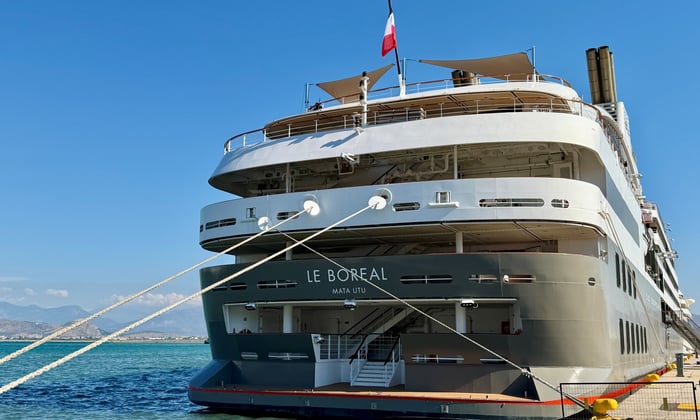
Le Boreal is the first of four sister ships in the Ponant Explorations fleet, alongside L'Austral, Le Soleal and Le Lyrial, carrying 264 guests in 132 staterooms and suites. The style is sleek and quietly glamorous, closer to a private yacht than a liner, and at this size you know your way around by the end of day one. Accommodation runs from window and porthole staterooms, some sleeping three, through balcony staterooms and Deluxe and Prestige Suites, the latter interconnecting for families of four, up to the Owner's Suite. Sizes start at around 200 square feet, all in a bright, airy, neutral palette, with the very French arrangement of a toilet separate from the bathroom.
Dining on board
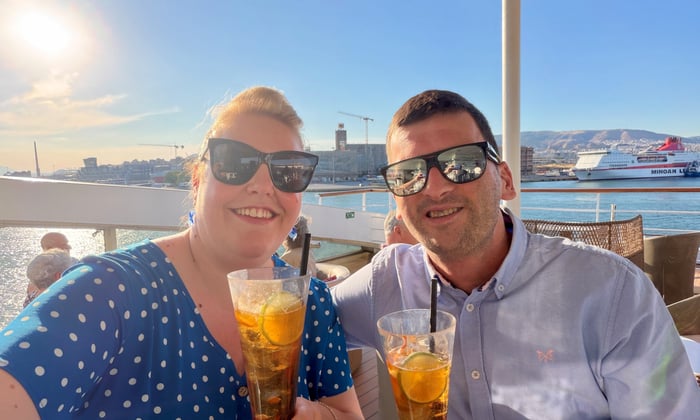
There are two restaurants. The Gastronomic Restaurant, wrapped in picture windows, serves à la carte breakfast and dinner with a distinctly French accent, and it comes into its own on gala nights, when cloches arrive with real theatre at the captain's table, and guests dressing up for the occasion, with men donning jackets and ladies in heels watch the sun set over five courses and white-glove service. The Grill on deck six is the casual option, a buffet at breakfast, lunch and dinner with al fresco tables beside the pool and a destination-themed counter that kept us in gyros, fresh seafood, Turkish-inspired pizzas, French caviar and rather more baklava than was strictly wise.
Lounges, spa and pool
For a small ship there is a generous choice of places to settle. The Observation Lounge at the front of deck six is the quiet one, with an extensive library, table games and a small bar, and the Panoramic Terrace outside it is usually empty apart from a few sun loungers, which is reason enough to go. The Main Lounge on deck three is the hub of the ship: the meeting point for excursions, the stage for demonstrations of local dishes and the after-dinner venue for the house performers, DJ sets, quizzes and karaoke, which proved rather amusing.
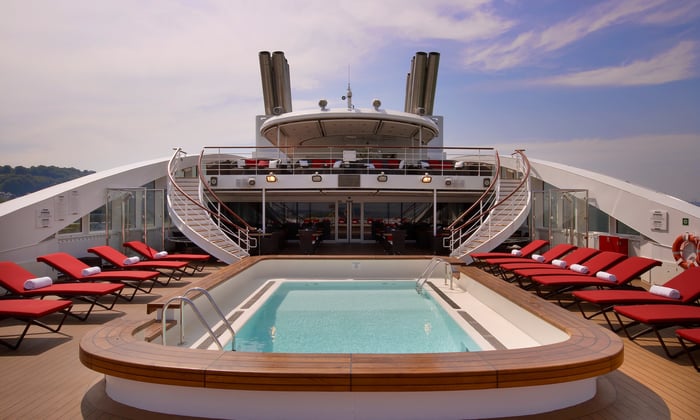
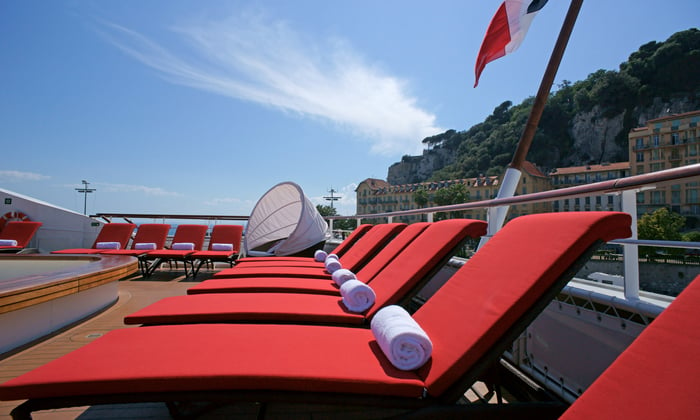
The Sothys Spa sits aft on deck five with a large gym, treatment rooms, a salon and a wonderful hammam, plus a sheltered wind-down terrace over the stern that few guests seem to find. Above it, the open-air pool is the classic Ponant setting, with the pool bar overlooking it from deck seven and the tricolore flying behind; most of the best sunset photographs on board were taken here. There is also the Ponant Studio, where the onboard photographer and videographer document the voyage for you to buy at the end should you wish, and a boutique stocked with yacht-style clothing, jewellery and accessories.
The Smithsonian Journeys difference
Smithsonian sailings sit at the serious end of cultural ocean cruises, and you feel it in how the ship is used. Aside from the captain's welcome, the safety drill and the World Cup screenings (a crowd of ten of us for an England game), the theatre was kept for lectures from university professors, architectural historians, photographers and travel writers, covering the Bronze Age, the Athenian empire, Roman cities and Byzantine icons. The lecturers accompany guests on many of the excursions, one of which is included per person per day, so very few people stayed on board in port. Le Boreal's open bridge policy added another layer, particularly cruising beneath the 1915 Canakkale Bridge and arriving into Istanbul at first light. One practical point worth knowing: Ponant ordinarily runs bilingual voyages in French and English, but Smithsonian departures are fully English-speaking, and ours had an easy mix of American, Australian, Canadian, European and British guests.
The route: Athens to Istanbul
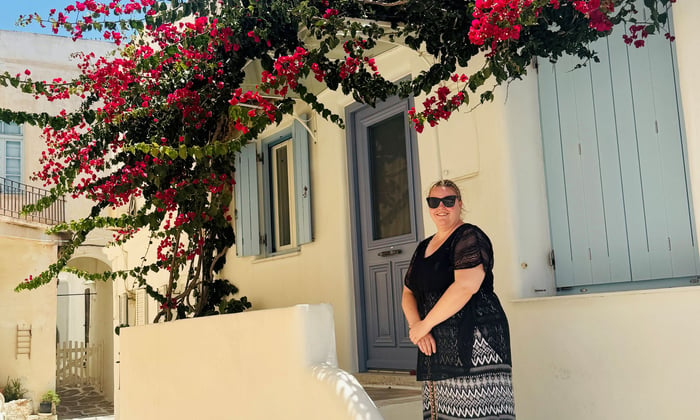
From Piraeus, we first called at Nafplion, with its narrow Old Town lanes and neoclassical facades, then Paros, white marble and quintessentially Greek, where our ABBA-themed boat trip ended with a swim in the Aegean and no regrets. Kusadasi brought the labyrinth of the bazaar, and most guests took the full-day excursion to Ephesus. On Patmos we visited the Cave of the Apocalypse and the Monastery of Saint John, where Saint John is traditionally held to have written the Book of Revelation. A morning cruising the Dardanelles brought us to Canakkale, with a choice between the Gallipoli battlefields of the First World War and the ruins of Troy, before we finished in the heart of Istanbul, where Europe meets Asia, and stayed on for a night of our own.
Who this cruise suits
This is a cruise for travellers who want substance with their sunshine. If a professor before dinner sounds like a treat rather than homework, the Smithsonian programme makes the destinations land far more deeply, and the fully English-speaking voyage settles a question that gives some guests pause about standard Ponant departures. It also suits anyone who enjoys a proper gala evening, a tradition Ponant keeps alive. Families should know there is a small children's corner behind the Ponant Studio, with board games, puzzles and books; it is not promoted, and there were only two teenagers on our sailing, so this is a ship for self-sufficient older children rather than anyone expecting a kids' club. And if what you want from evenings is big production entertainment, this is the wrong sailing, happily so.
The crew, a mix of French, Indonesian and Filipino, were warm and attentive throughout, the food was consistently good, and the ship's size meant lesser-visited islands like Patmos fitted naturally into the route, with public rooms that never felt crowded.
If a cultural ocean cruise appeals, or you would like to weigh a Smithsonian departure against Ponant's regular programme, find out more about Ponant or speak to the team and we will point you to the right sailing.

Meet the Author