Japan, China and South Korea cruises are, in practice, about
Japan.
Small ships move between Japan's main islands, balancing major
cities with quieter regional ports. Days shift from neon streets
and food halls to harbours backed by mountains and local markets.
An international stop adds contrast, while Japan remains the focus
throughout.
Japan, China & South Korea Small Ship Cruises

Find a cruise
Our top picks
Azamara
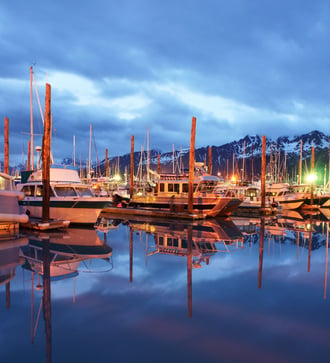
Alaska & Japan Cruise: Icy Strait, Seward & Tokyo
From Vancouver to Tokyo
27 Aug - 17 Sep 2026 (21 Nights)
From £3,869 per guest
Azamara
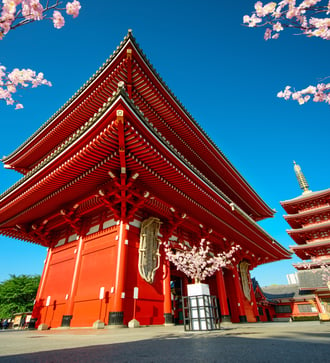
Canada to Japan Grand Voyage
From Vancouver to Tokyo
27 Aug - 2 Oct 2026 (36 Nights)
From £10,729 per guest
Azamara
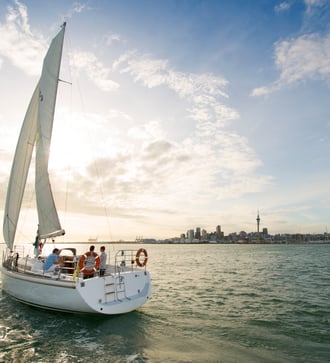
Canada to New Zealand Grand Voyage
From Vancouver to Auckland
27 Aug - 19 Dec 2026 (114 Nights)
From £34,599 per guest
Windstar Cruises
Star Collector: Japan & North Pacific Crossing
From Anchorage to Kobe
2 Sep - 26 Sep 2026 (24 Nights)
From £7,334 per guest
Our Insight
Japan, China and South Korea cruises
Japan is a place of constant contrast and cruising shows it clearly. You move from huge coastal cities to smaller ports where mountains rise behind the harbour and temples sit a few streets back from the water. One day might be spent in a city of neon streets, rail lines and late-night food stalls, the next in a quieter town shaped by markets, old houses and fishing boats.
Most Japan, China and South Korea cruises are, in reality, about Japan. Itineraries spend most of their time moving between the country's main islands, calling at ports such as Tokyo or nearby Yokohama, then continuing on to places like Kobe, Hiroshima or Kanazawa. Further north, ports such as Hakodate and Otaru feel cooler and less crowded, with a slower pace and a stronger sense of regional life.
It's a stunning way to see just how varied Japan really is.
The small ship difference in Japan
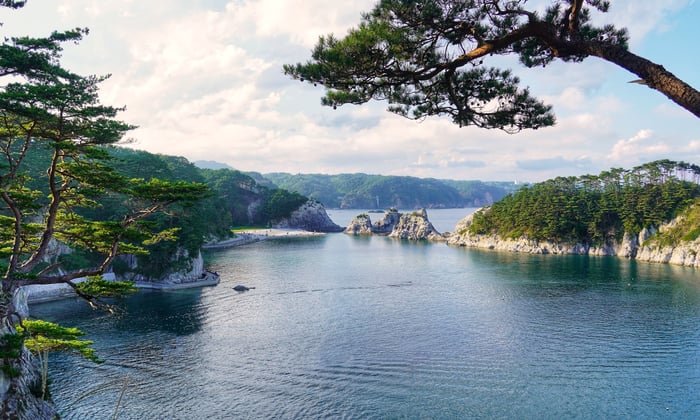
Japan lends itself naturally to cruising. Because the country is so mountainous, many cities sit close to the coastline, ports open near historic districts and neighbourhoods and much of the experience unfolds on foot. Cruising lets you wake up somewhere new each morning, without spending your time crossing Japan to get there.
A luxury Japan cruise gives you space to experience Japan properly, with more time in port, rather than moving quickly from highlight to highlight.
Some of Japan's ports were not designed for very large ships, which is why the luxury small cruises can dock closer to city centres. This means less time travelling inland and more time stepping straight into the neighbourhoods, markets and quieter ports.
All itineraries include one non-Japanese port, usually Busan in South Korea, or on a smaller number of longer voyages, Shanghai or even Beijing. It is a practical maritime requirement, but it works beautifully, giving a sharp contrast before returning to Japan's coast, where most of the journey unfolds.
Luxury small ship Japan cruise itineraries
Itineraries typically range from 10-14 nights, with longer voyages combining Japan with South Korea or China.
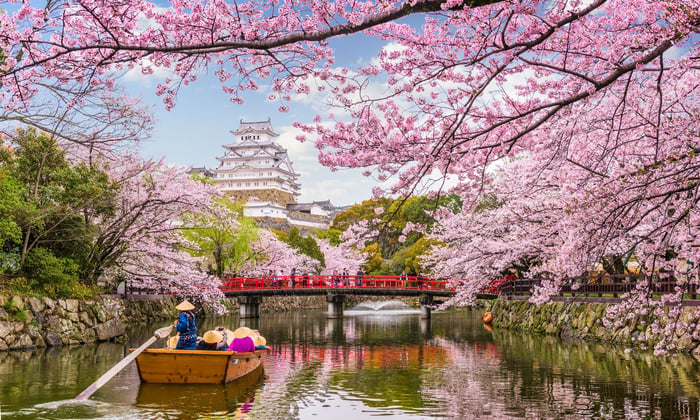
- Spring itineraries focus on cherry blossom season.
- Autumn sailings are now a regular feature, offering cooler temperatures and seasonal colour.
- Summer itineraries are increasing, with fewer crowds and strong value, particularly on new routes introduced for 2027.
Some itineraries even extend south beyond Japan's main islands to the subtropical island chain stretching towards Taiwan. These smaller islands feel very different, with white sand beaches, warmer seas and lush vegetation. The shift is not only in landscape. Ryukyu history gives these islands a different cultural identity from mainland Japan.
Most voyages are circular from Japan, with one international port included. Others begin or end in South Korea or China but remain Japan-focused.
Japan regions you will cruise through
One of the strengths of opting for luxury Japan cruises is the regional variety. Each part of the country feels distinct.
Kanto and Tokyo Bay
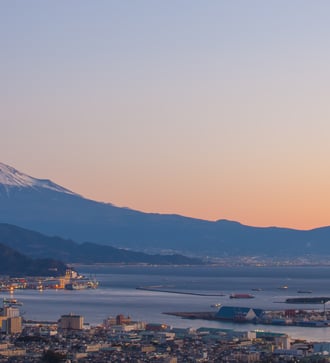
Tokyo and Yokohama sit at the heart of the Kanto region. Modern Japan is most visible here, with neighbourhoods, museums and food culture within easy reach of the port. On clear days, the iconic outline of Mount Fuji rises beyond the city, a quiet counterpoint to the density below. It is a natural starting or finishing point and sets the tone for the journey.
Kansai and Kyoto
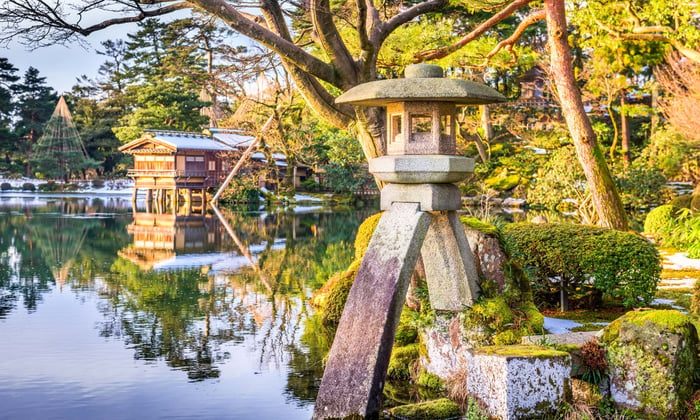
Kyoto is usually accessed via Kobe or Osaka. This region sits at the centre of Japan's cultural identity, with temples, shrines, gardens and traditional streets. Many guests see this as the emotional heart of their cruise.
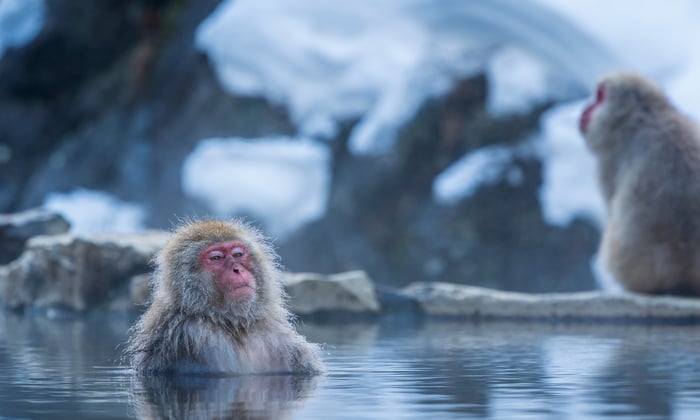
Western Honshu
Ports such as Hiroshima, Himeji and Shimonoseki add historical context. Hiroshima's Peace Memorial Park is often paired with a visit to Miyajima Island. This region balances reflection with everyday life and fits naturally into a cruise itinerary.
Northern Japan and Hokkaido
Hakodate and Otaru introduce a cooler climate and wider spaces. Markets, coastal walks and mountain views define the experience. These ports feel less crowded and provide contrast with the larger cities further south.
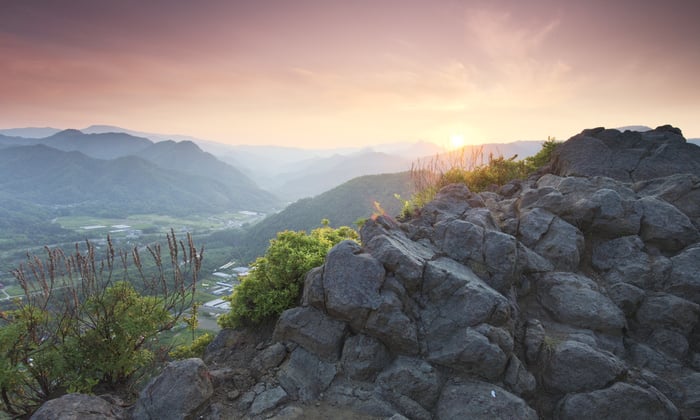
Southern Japan and Okinawa
Some itineraries extend south to a chain of smaller islands, including Okinawa, where the pace slows and the culture shifts. Subtropical landscapes, beaches and Ryukyu heritage offer a different view of Japan.
South Korea and China as additional stops
Busan is the most common non-Japanese port, adding a short burst of energy and contrast before the ship returns to Japan. Shanghai appears only on longer sailings and offers a brief sense of China's scale and intensity. In both cases, Japan remains the core of the journey.
Luxury cruise lines sailing Japan
The best time to cruise Japan
- Spring, especially late March and April, is the most popular time to visit. Cherry blossom season (sakura) brings soft colour to city streets, riversides and temple grounds. But, demand is high and sailings sell out quite early, so don't delay your plans.
- Autumn is now just as established. Thanks to its cooler air, clear days and autumn colour that suits long days ashore, with a calmer feel than spring.
- Summer is emerging as a strong option too. Northern ports are comfortable, days are long and availability is better.
- Winter sailings are limited and usually focus on specific regions rather than full coastal routes.
Travel tips and FAQs for Japan cruising
Is Japan easy to explore from the port?
Yes. Many ports are close to city centres, and places like Yokohama, Kobe and Hakodate are easy to explore independently on foot or by local transport. A clear plan helps you use your time ashore well, particularly if you want to see more than the immediate port area.
Do I need guided excursions in Japan?
Not always. Guided tours add context in places like Kyoto or Hiroshima, but Japan's public transport is reliable and easy to use, so many guests explore independently for part of their time ashore.
How long are port stays in Japan?
Port stays are often a full day on small ship itineraries. Because many ports are close to city centres, most of that time can be spent exploring rather than travelling to and from the port.
How do South Korea and China fit into the itinerary?
These calls are usually brief and included to meet local cabotage requirements. They add contrast along the way, but the itinerary remains focused on Japan.
What our clients say
“Very well organised, friendly and prompt responses to any queries, and helpful suggestions.”Mr Green
collections
You may also like

Mekong river
The Mekong, South East Asia’s longest river, passes through Cambodia, Vietnam and Laos, offering a glimpse of the diverse cultures and history of these very different countries.

South East Asia
Spectacular South East Asia lures travellers to the tropics with the promise of beautiful beaches, idyllic islands, bustling cities and incredible wildlife.

India & Sri Lanka
Cruises in India and Sri Lanka are a magnificent introduction to a country where every sense is turned up to eleven, with vibrant colours and smells, extraordinary people and cultures, and an amazing history.